Neurotoxins

Regulating Facial Motion
Neurotoxins reduce muscle activity responsible for repetitive facial expressions and dynamic lines.
Treatment planning focuses on muscle strength, facial symmetry, and expression patterns. The goal is controlled relaxation rather than complete immobilization, allowing the face to remain expressive while reducing the formation and visibility of dynamic wrinkles.


Targeted Muscle Modulation
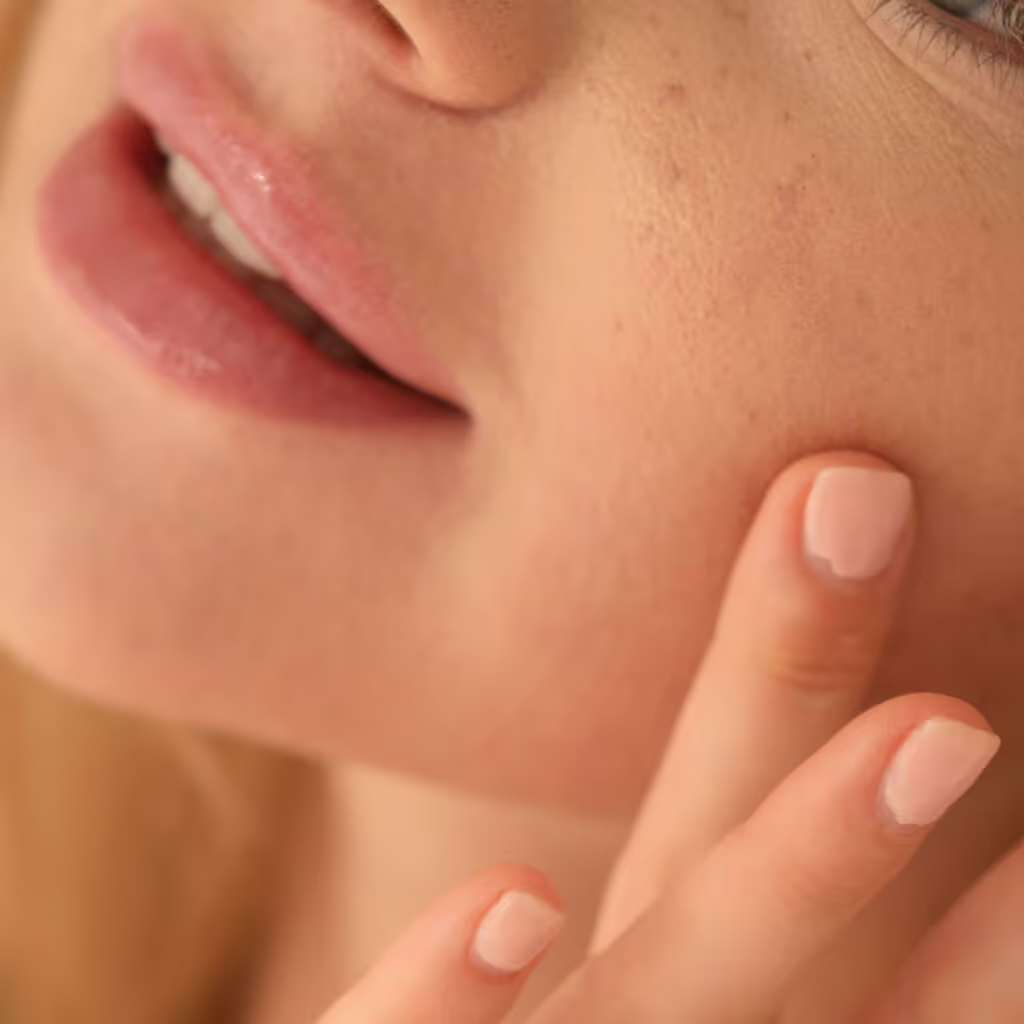
Neurotoxins temporarily block nerve signals that trigger muscle contraction. By reducing targeted muscle activity, overlying skin experiences less repetitive folding. This controlled relaxation helps soften existing lines and slows the formation of deeper creases without altering facial structure or skin volume.
Dosage and placement are determined by muscle size, strength, and movement patterns. Precise application allows selective modulation while preserving surrounding muscle function. Treatments are adjusted over time based on response, facial changes, and long-term balance rather than fixed dosing templates.
Appropriate Candidates
Neurotoxin treatments are suitable for individuals concerned about dynamic facial lines caused by repeated muscle movement. Candidates typically seek subtle improvement while maintaining natural expression. A medical evaluation determines suitability based on anatomy, muscle activity, and aesthetic goals.
Patients may include those new to injectables or individuals maintaining prior results. Neurotoxins are also used preventively to slow wrinkle progression. Candidacy depends on overall health, facial symmetry, and realistic expectations rather than age alone or severity of visible lines.



Controlled Aesthetic Improvement
Neurotoxin treatments reduce visible dynamic lines while preserving expression. Benefits include smoother skin appearance, balanced facial movement, and gradual wrinkle prevention when performed conservatively and consistently under medical supervision with individualized dosing and placement strategies.
Reduces repetitive muscle activity without freezing facial expression
Helps soften existing dynamic lines over time
Supports gradual wrinkle prevention with consistent treatment
Customized dosing based on muscle strength and anatomy
Preserves natural movement and facial balance
Short treatment time with minimal downtime
Any Questions?
Results typically last 3–4 months, at which point a maintenance treatment is recommended to keep the skin smooth.
Yes. While widely known for smoothing fine lines, neurotoxins are highly effective for addressing various structural and functional concerns. At our practice, we use these treatments to alleviate muscle tension, particularly in the masseters to treat TMJ or teeth grinding, and in the trapezius muscles to relieve shoulder tightness and "tech neck." Beyond pain relief, these injections can be used for facial slimming, neck contouring, and treating hyperhidrosis (excessive sweating) by blocking the nerve signals that trigger sweat glands.
provider-led practices utilize precise dosing and strategic placement to preserve enough muscle movement for natural facial expressions.
Most patients schedule sessions every 12 to 16 weeks to maintain a consistent smoothing effect and prevent the recurrence of deep lines.
These treatments are most commonly used for the forehead, glabella (frown lines), and lateral canthal lines (crow’s feet) to create a refreshed look.
The clinical effects generally persist for 3 to 4 months, after which muscle activity gradually returns and a follow-up session is required.
Yes, by relaxing active muscles early, these treatments can prevent static wrinkles from becoming deeply etched into the skin over time.
Patients may experience localized redness, slight swelling, or minor bruising at the injection sites, which typically resolve within a few days.
There is no clinical downtime; patients can resume most daily activities immediately, though strenuous exercise should be avoided for 24 hours.
Neurotoxins function by temporarily blocking nerve signals to specific muscles, preventing the repetitive contractions that lead to etched lines.
Initial softening of lines often appears within 3 to 5 days, with the final, peak effect visible at the 14-day mark post-treatment.


Superior Quality Plastic Surgery Care
Our team pursues continuous training to stay current with evolving techniques, safety standards, and aesthetic advancements, ensuring every recommendation reflects thoughtful, modern judgment. Dr. Capraro remains personally involved from consultation through recovery, offering calm guidance, clear communication, and consistent, patient-centered care throughout treatment.
Take the First Step Toward Confident Results
Book a personalized consultation and receive clear, physician-led guidance focused on your goals, comfort, and long-term results, with thoughtful recommendations designed to feel natural, intentional, and never rushed.