What Is Medical Skin Care, and Does Your Skin Actually Need It?

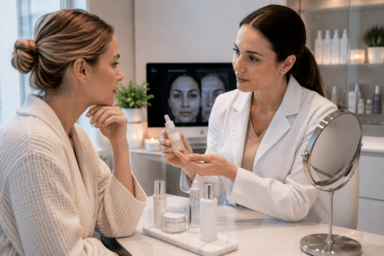
There is a moment a lot of people reach where the usual routine of drugstore serums and the occasional spa facial just stops keeping up. Maybe breakouts that used to clear up on their own now linger for weeks. Maybe sun spots have started showing up faster than they fade. Or maybe your skin just feels rough and tired no matter how much you moisturize. That gap between what over the counter products can fix and what your skin actually needs is exactly where medical skin care comes in.
At Capraro Plastic Surgery, our aesthetician team works with patients in Greenwood, Colorado every week who are trying to figure out where their skin concerns fall on that spectrum. Below, we will go through what medical skin care actually means, what conditions it is designed to treat, and how to know when it is time to move beyond a basic facial.
What Makes Skin Care "Medical" Instead of Just Cosmetic?
The term gets used loosely, so it is worth clarifying what actually separates medical skin care from a typical spa experience.
Who Provides Medical Skin Care?
Medical skin care is typically administered or supervised by licensed medical aestheticians, nurses, or physicians working within a medical practice, rather than a day spa. This matters because medical grade treatments and products often use higher concentrations of active ingredients and more advanced technology than what is available over the counter or in a standard spa setting.
Does That Mean It Is More Aggressive?
Not necessarily more aggressive, but more precise. Medical skin care is built around assessing the actual condition of your skin, including things below the surface that are not always visible to the eye, and then customizing a treatment plan rather than offering a one size fits all service.
What Skin Concerns Typically Call for a Medical Approach?
Certain symptoms are strong signals that a spa facial alone will not move the needle.
Persistent Acne or Clogged Pores That Won't Clear
If breakouts are frequent, deep, or leaving marks behind, that pattern often points to underlying factors like excess oil production, bacteria, or inflammation that require more targeted treatment. Options like chemical peels or diamond microdermabrasion are often used to help manage this more effectively than surface level products.
Uneven Pigmentation or Sun Damage
Years of sun exposure, especially given how much sunshine Colorado sees throughout the year, can lead to dark spots, uneven tone, and a dull overall complexion. Treatments designed to address pigmentation, such as chemical peels or laser toning, work at a deeper level than topical brighteners alone.
Rough Texture or Visible Pores
When skin feels bumpy or looks textured even under makeup, it is often a sign of a buildup of dead skin cells combined with reduced cell turnover. Professional exfoliation methods, including microdermabrasion and dermaplaning, are designed specifically to address this.
Redness or Visible Vascular Concerns
Ongoing redness, flushing, or visible small blood vessels can be frustrating to manage with skin care products alone. These concerns often benefit from treatments focused on vascular lesion reduction performed under professional supervision.
Fine Lines and Early Signs of Aging
Once fine lines start appearing around the eyes or mouth, many people find that their existing routine no longer feels like enough. Treatments like microneedling or RF microneedling are often introduced at this stage to support collagen production more directly than a cream can.
How Do You Know Which Treatment Is Right for Your Skin?
With so many treatment options available, it helps to understand how a provider actually determines the right path forward.
Does It Start With a Skin Assessment?
Yes. A thorough evaluation of your skin type, concerns, and history is typically the starting point, since two people with similar complaints, like dullness or breakouts, may need very different approaches depending on their skin's underlying condition.
Can Multiple Treatments Be Combined?
Often, yes. Many patients benefit from a combination approach, such as pairing a chemical peel with LED light therapy, or alternating microneedling sessions with maintenance facials. A well built plan usually evolves over several months rather than relying on a single visit.
What Does a Typical Medical Skin Care Visit Look Like?
Understanding what to expect can make the idea of a first visit feel a lot less intimidating.
How Long Does a Visit Typically Take?
Most treatments range from thirty minutes to an hour, depending on the service, with time built in for consultation and aftercare guidance.
Is There Downtime Afterward?
This varies by treatment. Something like dermaplaning has essentially no downtime, while a deeper chemical peel might involve a few days of visible peeling or redness. Your provider should walk you through what to expect before you leave.
Why See a Plastic Surgery Practice for Medical Skin Care Instead of a Spa?
The biggest advantage of medical skin care within a plastic surgery practice is access to a broader range of tools and clinical oversight. If a concern turns out to need something beyond skin care, such as volume loss that would respond better to filler or a laser resurfacing treatment for deeper texture issues, that conversation can happen in the same visit rather than requiring a referral elsewhere.
At Capraro Plastic Surgery, our aesthetician services cover a wide range of medical grade treatments, including chemical peels, microneedling, and dermaplaning. If you are trying to pinpoint your specific concern first, our skin concerns overview is a helpful place to start, whether that is acne and clogged pores, pigmentation and sun damage, or skin texture and dullness.
Frequently Asked Questions
How is medical skin care different from a facial at a day spa? Medical skin care is typically overseen by trained medical professionals and uses higher strength treatments and products designed to address specific skin conditions, rather than general relaxation and maintenance.
How often should I get medical skin care treatments? This depends on the treatment and your goals, but many patients start with a series of sessions spaced a few weeks apart, followed by ongoing maintenance every one to three months.
Will medical skin care help with acne scarring? Many treatments, including chemical peels and microneedling, are commonly used to help improve the appearance of acne scarring over a series of sessions.
Is medical skin care only for older patients? Not at all. Many patients in their twenties and thirties use medical skin care to manage active concerns like acne or early sun damage, not just aging related changes.
Do I need a consultation before starting treatment? Yes, a consultation allows your provider to properly assess your skin and recommend a plan that fits your specific concerns rather than guessing at what might work.
Give Your Skin the Upgrade It's Been Hinting At
If your current routine has started to feel like it is just maintaining the status quo instead of actually improving your skin, that is usually a sign it is time for a more targeted approach. Our team in Greenwood, Colorado is ready to help you figure out exactly what your skin needs next. Schedule a consultation to get started.