Why Does Your Stomach Still Look Loose No Matter How Much You Diet and Exercise, and Is That Normal?
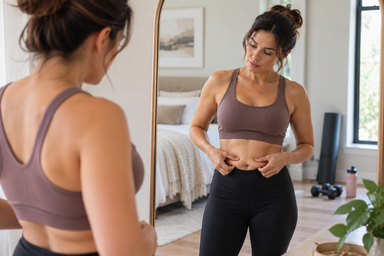
You did everything right. You lost the weight, or you had your last baby years ago, and you have kept up with a consistent workout routine since. Your core is stronger than it has ever been. And yet, when you look down or catch a side profile in the mirror, there is still a pouch of loose skin, sometimes a bulge that will not flatten no matter how many crunches you do. If this describes you, you are not doing anything wrong, and you are far from alone in wondering why the mirror does not match the effort.
At Capraro Plastic Surgery, this is one of the most common frustrations Denver patients bring to their first consultation, and understanding the actual cause changes the conversation entirely.
Abdominoplasty in Denver, Colorado
At Capraro Plastic Surgery, we perform abdominoplasty surgery for patients throughout Denver, Colorado, and the greater Denver metro area. Whether loose skin and muscle separation followed pregnancy, significant weight loss, or both, our Denver surgical team builds a plan around your specific anatomy and goals.
What Actually Causes Loose Abdominal Skin?
Skin has a certain amount of natural elasticity, meaning its ability to stretch and then spring back to its original shape. Significant weight gain followed by weight loss, or the dramatic stretching that happens during pregnancy, can exceed the skin's capacity to fully retract, especially when that stretching happens repeatedly or over a shorter period of time. Once skin has been stretched significantly beyond its elastic limit, no amount of diet, exercise, or topical product can force it to fully snap back, because the underlying collagen and elastin fibers have already been damaged or overextended.
Age is a compounding factor. Collagen production naturally declines over time, which means skin has less capacity to retract at forty than it did at twenty five, even with an identical amount of weight change.
What Is Diastasis Recti, and Why Does It Cause a Persistent Bulge?
A lot of patients are surprised to learn that the pouch they see is not always just skin. During pregnancy, or in some cases significant weight gain, the connective tissue running down the center of the abdominal muscles, called the linea alba, can stretch and separate, a condition known as diastasis recti. This separation allows the abdominal wall to bulge forward even when the underlying muscles themselves are strong and well conditioned. Core exercises can strengthen the muscles on either side of the separation, but they cannot close the gap in the connective tissue itself once it has stretched beyond a certain point. This is one of the most common reasons patients feel like their stomach still looks pregnant or pouched even years after significant weight loss or childbirth, despite a rigorous fitness routine.
Why Doesn't Exercise Fix This?
Exercise builds and tones muscle, but it does not restore skin elasticity, and it cannot repair a separation in connective tissue. Spot reduction of fat through targeted ab exercises is also a persistent myth. The body does not selectively burn fat from one specific area based on which muscles are being worked, which is why some patients with a genuinely low body fat percentage still have a stubborn lower abdominal bulge or loose skin that exercise alone has not resolved.
Can Loose Skin and Muscle Separation Be Prevented?
Some prevention is possible. Gradual, steady weight loss rather than rapid weight loss gives skin more time to adjust, though it does not guarantee full retraction, particularly after significant changes. Maintaining a stable weight over time reduces additional repeated stretching. Prenatal and postpartum core exercises focused on deep abdominal engagement can help some degree of muscle separation improve on its own in the months following childbirth, though more significant separations often do not fully resolve without intervention. That said, once skin laxity or a meaningful diastasis has developed and stabilized, it typically requires a surgical approach to correct fully.
How Does Abdominoplasty Address These Concerns?
Abdominoplasty, commonly known as a tummy tuck, is a surgical procedure designed to address exactly these two issues at once. During the procedure, excess loose skin is surgically removed, and the underlying abdominal muscles, including any separation from diastasis recti, are repaired and sutured back into a tighter, more supported position. This combination is why abdominoplasty produces results that diet, exercise, and non surgical treatments cannot achieve on their own, since it directly corrects both the skin and the structural muscle separation rather than working around them. You can learn more about the procedure on our abdominoplasty procedure page.
What Should You Expect From Surgery and Recovery?
Abdominoplasty is performed under anesthesia and typically takes two to three hours depending on the extent of correction needed. Most patients stay in a compression garment for several weeks following surgery to support healing and reduce swelling. Initial recovery generally involves one to two weeks away from work and normal activities, with a gradual return to light activity over the following weeks. Most surgeons recommend avoiding strenuous exercise and heavy lifting for around six weeks to allow the repaired muscles to heal fully. Final results continue to refine over several months as swelling resolves and scars mature, with most patients seeing their full outcome around the six to twelve month mark.
Who Is a Good Candidate for Abdominoplasty?
Ideal candidates are generally in overall good health, at a stable weight, and dealing with loose abdominal skin, muscle separation, or both, that has not responded to diet and exercise. It is often an excellent option for patients who have completed their families, since future pregnancies can affect the results of muscle repair. Patients who are still planning significant future weight loss are typically advised to reach a stable weight first, since abdominoplasty is designed to address existing skin laxity and muscle separation rather than serve as a weight loss method itself. A thorough consultation, including a full health history, always precedes any surgical recommendation at our practice.
How Does Abdominoplasty Differ From Liposuction?
This is one of the most frequent points of confusion for Denver patients researching body contouring options. Liposuction removes excess fat but does not tighten loose skin or repair separated muscles, which makes it most effective for patients with good skin elasticity and localized fat rather than laxity. Abdominoplasty addresses skin and muscle directly, which is why patients with more significant skin laxity or diastasis recti typically need a tummy tuck rather than liposuction alone to achieve the flatter, tighter result they are looking for. Many patients actually combine both procedures, and some choose our mommy makeover option, which pairs abdominoplasty with additional procedures in a single surgical plan tailored to post pregnancy changes throughout the body.
Why Choose Capraro Plastic Surgery for Abdominoplasty in Denver?
Dr. Capraro and our surgical team take an individualized approach to every abdominoplasty consultation, evaluating your specific degree of skin laxity, muscle separation, and overall goals before recommending a surgical plan. You can view real patient outcomes in our before and after gallery and learn more about our surgical team and facility on our about page and our facility page.
This information reflects current surgical protocols as of September 2026.
Frequently Asked Questions
Is a tummy tuck the same as liposuction? No, liposuction removes fat only, while abdominoplasty removes excess skin and repairs separated abdominal muscles, addressing a different underlying problem.
Can diastasis recti heal without surgery? Mild separations sometimes improve with targeted core exercises, particularly in the months after childbirth, but more significant or long standing separations typically require surgical repair to fully close.
How long is recovery after abdominoplasty? Most patients take one to two weeks off from work, with a gradual return to normal activity over several weeks and full results visible over the following months.
Am I a candidate for abdominoplasty if I plan to lose more weight? Surgeons generally recommend reaching a stable, healthy weight before abdominoplasty, since significant future weight changes can affect the surgical results.
Will I have visible scarring after a tummy tuck? Abdominoplasty does leave a scar, typically placed low on the abdomen so it can be concealed by most clothing and swimwear, and it generally fades significantly over the first year of healing.
Your Core Was Doing Its Job All Along, It Just Needed Backup From a Scalpel
Loose abdominal skin and muscle separation are structural changes that diet and exercise alone often cannot fully correct, no matter how consistent the effort has been. If you are in the Denver area and want to know whether abdominoplasty is the right solution for your body, contact our team to schedule a consultation with our surgical team.