Why Don't I Have Dimples? What Greenwood, Colorado Patients Should Know About Dimpleplasty
Dimples have a funny way of making a smile feel more approachable, more youthful, and honestly, more memorable. If you have ever wondered why your sibling has them and you don't, or why they seem to fade as people get older, you are asking a question that has a pretty simple biological answer. And if you have been searching for dimpleplasty near me because you would love to add that little detail to your own smile, you are in the right place.
At Capraro Plastic Surgery, we get questions about facial features like this more often than people expect. Cheek dimples are one of those traits that feel small on the surface but carry a lot of curiosity underneath. Below, we will walk through what actually causes dimples, why some people are born without them, and what your options look like if you are considering dimpleplasty in Greenwood, Colorado.
What Causes Natural Dimples in the First Place?
Dimples are not a flaw or an imperfection. They are actually the result of a small variation in facial anatomy that most people are born with or without.
Is It Genetic or Just Random?
Dimples are often inherited, which is why they tend to run in families, but they do not follow a strict or predictable pattern. Two parents without dimples can occasionally have a child with them, and two parents with dimples do not always pass them on. Genetics plays a strong role, but it is not the only factor at work.
What Is Actually Happening Under the Skin?
The short version is this: a dimple forms when the zygomaticus major muscle, the muscle responsible for pulling up the corners of your mouth when you smile, has a small split or a shorter connection to the skin. When you smile, that muscle tugs on the skin from underneath, creating a visible indentation. People without dimples simply have a fully connected muscle band, so there is nothing pulling the skin inward in that same way.
Do Dimples Ever Show Up Later in Life or Disappear?
This is a question we hear surprisingly often, especially from people who remember having more defined dimples as a child.
Why Do Dimples Seem to Fade With Age?
As skin loses collagen and elasticity over the years, the contrast between the dimple and the surrounding cheek can soften. The muscle structure underneath does not change, but the way skin sits on top of it does. This is one of the reasons some adults feel like their dimples were more noticeable when they were younger.
Can Weight Changes Affect How Dimples Look?
Yes. Because a dimple is created by the pull of a muscle against the skin, changes in cheek volume from weight gain or weight loss can make dimples appear more or less defined. This is not a medical concern, just a normal part of how facial volume interacts with muscle movement.
Is It Possible to Create Dimples Surgically?
For people who were simply never born with this trait, the good news is that it can be created through a minor procedure.
What Is Dimpleplasty?
Dimpleplasty is a quick, in-office procedure designed to recreate the natural mechanism that causes dimples. A small internal suture is placed to gently anchor the underside of the cheek skin to the cheek muscle, mimicking the same subtle pull that produces a dimple naturally when you smile. It is a precise, minimally invasive way to add a permanent, natural looking dimple to one or both cheeks.
Does It Look Natural or Obvious?
When done thoughtfully, the result looks like the dimple was always there. The goal with dimpleplasty is to place the dimple in a location and depth that matches your natural smile pattern, so it moves and appears the way a genuine dimple would rather than looking flat or artificial.
Who Is a Good Candidate for Dimpleplasty?
Not every request for a cosmetic procedure is right for every person, so it helps to understand what makes someone a strong candidate.
What Should You Consider Before Scheduling a Consultation?
Good candidates are typically healthy adults who are bothered by the absence of dimples and want a permanent, subtle enhancement rather than a dramatic facial change. Because the procedure is done under local anesthesia and does not involve significant downtime, it appeals to people who want a low commitment way to add character to their smile.
Can You Choose Where the Dimple Goes?
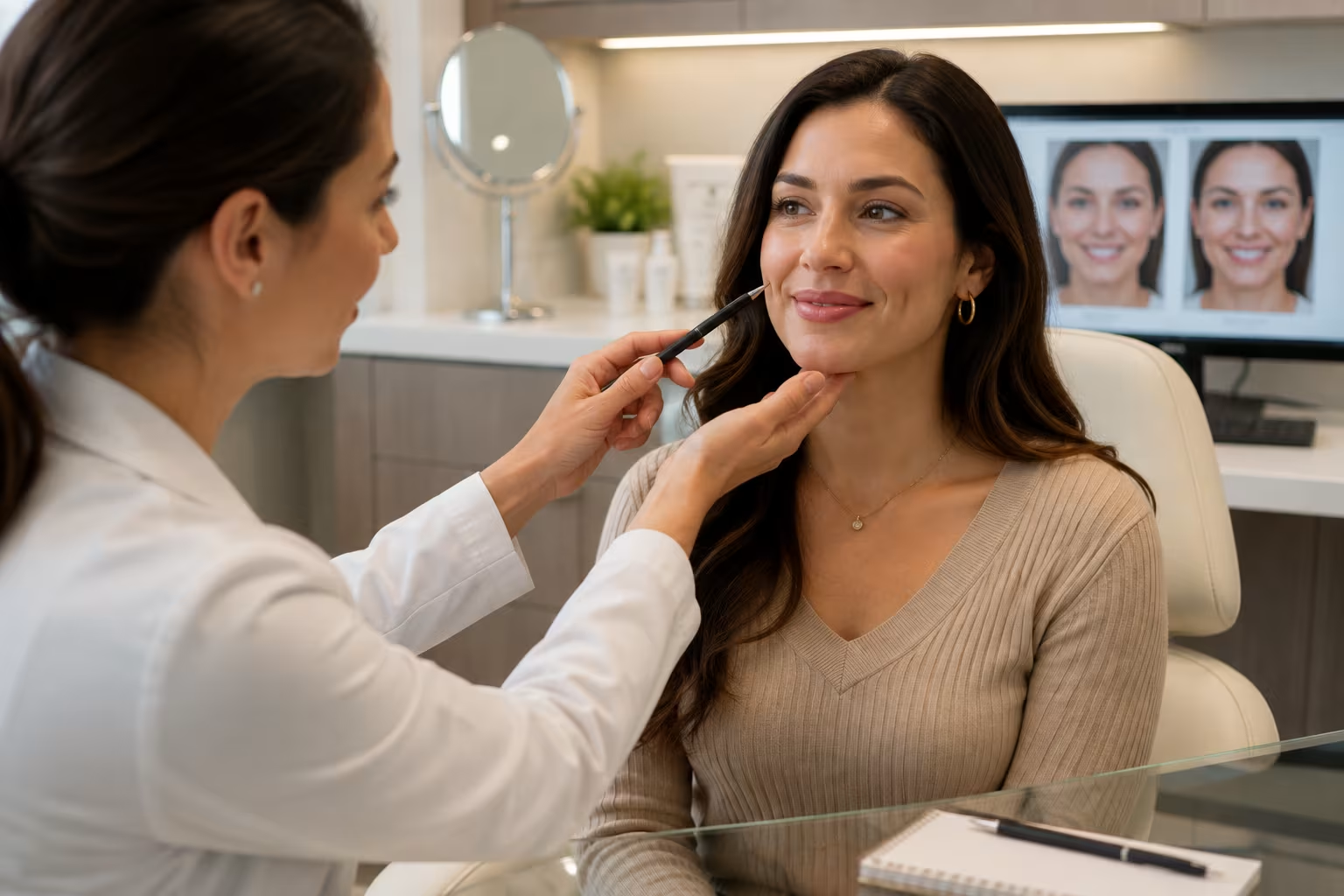
Yes. During your consultation at our Greenwood, Colorado practice, we take time to talk through placement, since even a few millimeters can change how a dimple looks when you smile naturally versus when you smile widely. This is part of why an in-person evaluation matters so much for a procedure like this.
What Does Recovery From Dimpleplasty Actually Look Like?
Because it is a minor procedure, recovery expectations are often much simpler than people assume.
How Long Does the Procedure Take?
Dimpleplasty is typically completed in well under an hour, often closer to twenty or thirty minutes per side, and is performed using local anesthesia so you are comfortable but able to go home the same day.
What Happens in the Days After?
Mild swelling or tenderness in the treated cheek is common for the first few days, and some patients notice the dimple looks slightly more pronounced at first before settling into its natural resting appearance. Most people return to normal activities almost immediately, with only light restrictions on strenuous facial movement or exercise for a short period.
When Will the Final Result Be Visible?
Initial swelling typically resolves within one to two weeks, though it can take a bit longer for the dimple to fully settle into how it will look long term. Patience during this short window makes a real difference in appreciating the final, natural look.
Why Choose a Plastic Surgery Practice for Dimpleplasty in Greenwood, Colorado?
Dimpleplasty might sound simple, but precision matters. Because the placement of the suture directly determines how the dimple looks when you smile, laugh, or talk, this is a procedure best handled by someone with a strong understanding of facial anatomy and aesthetic proportion. At Capraro Plastic Surgery, our team evaluates your unique facial structure and smile pattern before recommending placement, so the result complements your face rather than looking like an afterthought.
If you are curious whether dimpleplasty is the right fit for you, our dimpleplasty procedure page walks through more detail, and you can also explore real patient results to see how natural the outcome can look. We also encourage anyone comparing options for facial contouring to browse our full list of facial procedures to see how dimpleplasty fits alongside other subtle enhancements we offer.
Frequently Asked Questions
Is dimpleplasty painful? Most patients describe the sensation as mild pressure rather than pain, since the area is fully numbed with local anesthesia before the procedure begins.
How long do the results from dimpleplasty last? The results are intended to be permanent, since the procedure recreates the same muscle to skin connection that causes natural dimples.
Can I choose to have just one dimple instead of two? Yes. Many patients prefer a single, asymmetrical dimple because it tends to look more natural and closer to how dimples typically appear.
Will my dimple show even when I am not smiling? No. Like natural dimples, the indentation created through dimpleplasty typically only appears when the cheek muscle is engaged, such as during a smile.
Is dimpleplasty covered by insurance? Since dimpleplasty is considered a cosmetic procedure, it is generally not covered by insurance, but our team can walk you through financing and payment options during your consultation.
The Smile Detail You Didn't Know You Were Missing
Dimples are one of those small features that carry a surprising amount of personality, and it makes sense to be curious about how to get them if nature did not provide them on its own. If you have been thinking about dimpleplasty in Greenwood, Colorado, the team at Capraro Plastic Surgery is happy to walk you through what to expect, from placement to recovery to long term results. Reach out to schedule a consultation and find out if this small procedure might be the finishing touch your smile has been waiting for.
This article was updated in August 2026 to reflect current dimpleplasty techniques and patient guidance.