Is There a Right Age for Breast Augmentation? What Denver Women Should Weigh Before Booking

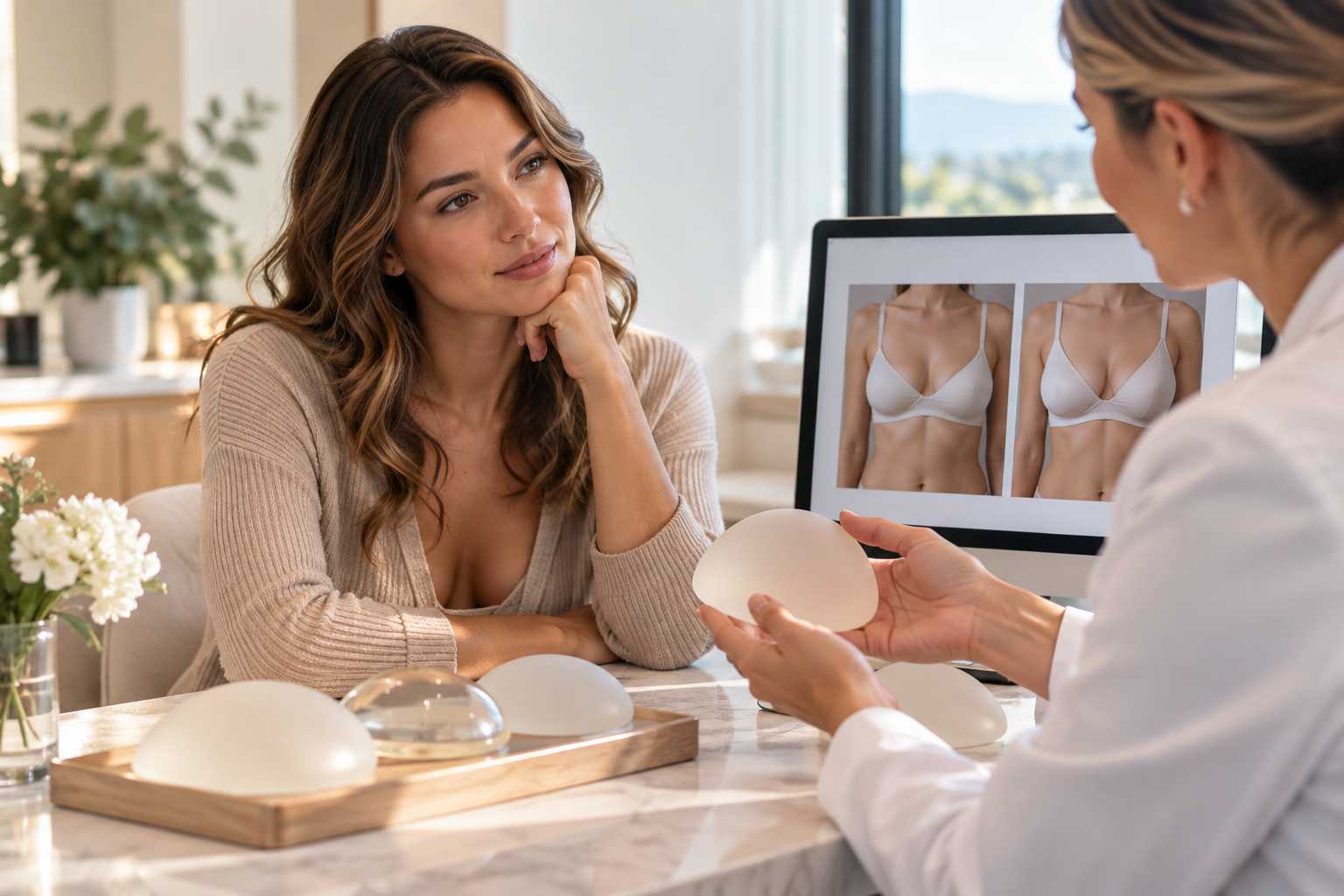
Some women start researching breast augmentation at 19. Others wait until their kids are in middle school, or until a promotion finally frees up the time and budget. Both are valid paths, and both raise the same question: is there a "right" age for breast augmentation?
The short answer is that there is a minimum age, but there is no ideal age that applies to everyone. The better question is whether your body, your plans, and your expectations are in a stable place. For women in Denver, Colorado, that usually comes down to a handful of practical factors: how settled your breast development and weight are, whether you plan to have children, and how much downtime your work and active lifestyle can realistically absorb.
Here is how to think through timing before you sit down for a consultation.
Is There a Minimum Age for Breast Augmentation?
Yes. In the United States, the FDA has approved saline-filled implants for cosmetic breast augmentation in women 18 and older, and silicone gel-filled implants for women 22 and older, according to the FDA's overview of breast implant types. Those age thresholds exist because breast tissue can continue to develop into a woman's late teens and early twenties.
Meeting the age requirement is only the starting line, though. A surgeon will also look at your overall health, skin quality, breast shape, and whether you have realistic expectations about what implants can and cannot do.
Why Does Body Stability Matter More Than Your Birthday?
Breast augmentation works best when the canvas is not about to change dramatically. Three things tend to shift breast size and shape over time:
- Ongoing development. Some younger women notice their breasts are still changing in size or symmetry in their early twenties.
- Weight fluctuation. Gaining or losing a significant amount of weight can change breast volume and skin elasticity.
- Pregnancy and nursing. These can stretch the skin, change volume, and alter the position of the breast.
If any of these are actively in motion, it may be worth waiting. A result planned around your current body may look different once that body changes. That is why Capraro Plastic Surgery asks about your weight history and future plans during consultation rather than focusing on cup size alone.
Should You Get Breast Augmentation Before or After Having Kids?
This is one of the most common timing questions, and there is no single right answer. It depends on how soon you plan to start a family and how you feel about a possible second procedure later.
According to the practice's breast augmentation page, implants are typically placed behind the milk ducts, and most women can still breastfeed afterward. That reassures many patients. Still, pregnancy can change the appearance of augmented breasts, and some women eventually choose a lift or an implant update to refresh their results.
The right timing depends on where you are in your family-planning journey:
- Pregnancy is several years away: Breast augmentation now may be reasonable, as long as you understand that a future pregnancy could change your results.
- Planning to conceive soon: You may prefer to wait until after pregnancy and nursing are complete before moving forward with augmentation.
- Finished having children: Augmentation may be considered on its own or combined with a breast lift if you are also dealing with sagging.
- Unsure about having children: Discuss both possibilities openly with your surgeon so your treatment plan can account for your current goals and potential future changes.
If you are already done having children and have both lost volume and sagging, a breast lift alone or combined with implants may be a better fit.
What Should Gen Z and Younger Adults Know Before Getting a Boob Job?
Younger patients often arrive well informed. They have watched recovery videos, saved photos, and compared implant profiles online. That research is useful, but a few realities rarely make it into a 60-second clip.
Implants are not lifetime devices. The FDA states plainly that breast implants are not lifetime devices and that the longer you have them, the more likely you are to need additional surgery. If you get implants at 22, it is reasonable to expect at least one future procedure over your lifetime, whether for an exchange, a size change, or a lift. You can read the FDA's full list of things to consider before getting breast implants.
Trends change faster than bodies do. The size or shape that dominates social media this year may not reflect what you want at 35. Many surgeons encourage younger patients to choose proportions that suit their frame rather than a look borrowed from a feed.
Budget for the long game. The initial procedure is only part of the cost of breast enhancement over time. Future imaging, revisions, or replacements are worth planning for now. The practice offers financing options that some patients use to spread out costs.
None of this means younger women should not pursue augmentation. It means the best decisions at 20-something are made with a 20-year view.
Is Breast Augmentation Different in Your 30s, 40s, or 50s?
The procedure itself is similar, but the goals often shift with age.
- In the 20s, the focus is often on adding volume to breasts that never fully developed or correcting asymmetry.
- In the 30s and 40s, many women want to restore fullness lost after pregnancy, nursing, or weight changes.
- In the 40s, 50s, and beyond, skin elasticity becomes a bigger factor. Implants alone may not lift breasts that have descended, so combining augmentation with a lift is more common.
Women in later decades should also expect a thorough health review before surgery. Age alone does not rule anyone out, but overall health and healing capacity matter more as the years go on.
How Much Time Off Do Busy Denver Professionals Need?
For many working women, the real timing question is not "how old should I be?" but "when can I actually step away?"
According to Capraro Plastic Surgery's recovery guidance, most breast augmentation patients return to work in about one week. During recovery, patients are asked to:
- Sleep on their back with the upper body slightly elevated for the first two weeks
- Avoid lifting anything over five pounds or doing strenuous upper body exercise for four to six weeks
- Wear a surgical bra or supportive garment around the clock as directed
- Wait about six weeks before resuming upper body workouts
Recovery varies from person to person, and your surgeon will tailor instructions to your procedure. If your job involves lifting, travel, or long hours on your feet, plan a little extra cushion.
Denver's active culture matters here too. If ski season, a summer climbing trip, or a half marathon is on the calendar, schedule surgery so that you are fully cleared before you need your chest and shoulders again. Looking at your calendar a few months ahead makes it easier to fit surgery between work deadlines and Colorado's outdoor seasons.
What Questions Should You Ask About Timing at Your Consultation?
Bring these to your appointment:
- Is my breast development and weight stable enough for surgery right now?
- How might a future pregnancy affect my results?
- Do I need a lift, or will implants alone give me the shape I want?
- Which implant type, saline or silicone, fits my age and goals?
- What does long-term monitoring look like, and how often might I need imaging?
- When could I realistically return to work and to my usual workouts?
Your surgeon may also discuss alternatives. Some patients who want a subtle change ask about fat transfer versus implants, which uses your own fat for a more modest increase in volume.
Frequently Asked Questions
What is the best age for breast augmentation?
There is no single best age. Most surgeons focus on whether breast development and weight are stable, whether you plan future pregnancies, and whether you are in good health. Legally, saline implants are FDA approved for women 18 and older and silicone implants for women 22 and older.
Can I get breast implants before having children?
Yes, many women do. Implants are typically placed in a way that preserves the ability to breastfeed for most patients, but pregnancy may change the look of your breasts. Some women choose a lift or implant update afterward.
Is it too late to get breast augmentation in my 50s?
Not necessarily. Healthy women in their 50s and beyond can be candidates, though they are more likely to benefit from a lift combined with augmentation because skin elasticity changes with age.
How long after breast augmentation can I go back to work in Denver?
Most patients return to work in about a week, though desk jobs are easier to resume than physically demanding roles. Heavy lifting and upper body exercise usually wait four to six weeks.
Will I need another surgery later?
Possibly. Breast implants are not lifetime devices, and many patients eventually have an exchange, revision, or lift. Planning for that from the start helps you make a more confident decision.
Timing Is Everything (and So Is a Good Support Bra)
The right age for breast augmentation is less about the number on your driver's license and more about whether your body, your future plans, and your schedule are lined up. Whether you are a younger woman thinking ahead, a busy professional juggling deadlines, or a mom ready to reclaim some of what pregnancy changed, the smartest first step is an honest conversation.
Capraro Plastic Surgery welcomes patients at its Denver office on Hale Parkway and its Greenwood Village office on East Union Avenue. To talk through your goals, timing, and options with Dr. Philippe Capraro and his team, request a consultation today.